Streamlining Your Visual Communication with the 3D Glasses Glyph Icon
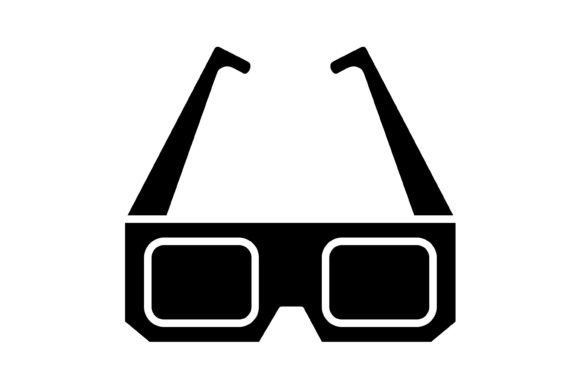
In the realm of digital content and interface design, clarity is the currency of engagement. When conveying complex concepts—such as immersive viewing, stereoscopic technology, or entertainment options—relying on text alone often slows down the user experience. This is where the 3D Glasses Glyph Icon becomes an essential asset in a designer's toolkit. It serves as a universal visual shorthand, instantly communicating the presence of 3D content, VR capabilities, or cinematic features without requiring a single word of explanation. For professionals ranging from app developers to marketing strategists, integrating this specific icon is not merely about decoration; it is about optimizing the user journey and ensuring intuitive navigation.
The Anatomy of a Versatile Asset
Understanding the value of this asset begins with its technical composition. The package includes a comprehensive zip file containing five distinct file formats: AI, EPS, JPG, PNG (with transparent background), and SVG. This variety is not arbitrary; it is designed to solve specific workflow bottlenecks. For instance, the SVG format is critical for modern web and mobile development. Unlike raster images that pixelate when scaled, SVGs are code-based, meaning they load faster and look crisp on any screen resolution, from a budget smartphone to a 4K monitor. Conversely, the AI and EPS formats are the bedrock of print production and high-fidelity illustration, allowing for infinite scaling in physical media like posters or packaging.
The inclusion of a PNG with a transparent background addresses one of the most common implementation hurdles: layering. Whether you are placing the icon over a complex background image, a gradient, or a solid color block, the transparency ensures the icon blends seamlessly without the "white box" artifact that plagues lower-quality assets. This attention to technical detail ensures that the 3D Glasses Glyph Icon is ready to use immediately, eliminating the time-consuming process of background removal or file conversion that often disrupts creative momentum.
Strategic Integration into Workflow
For the productivity-minded creator, the utility of this icon extends across various stages of a project lifecycle. Consider the planning phase of a mobile application development cycle. During wireframing and prototyping, placeholders are necessary, but they often lack the psychological weight of real assets. By introducing the 3D Glasses Glyph Icon early in the design process, you provide stakeholders with a clearer vision of the final product. It helps bridge the gap between a functional wireframe and a market-ready interface, facilitating more accurate feedback from clients or team members.
Furthermore, the icon plays a pivotal role in the "decision-making" architecture of a user interface. In a media library or e-commerce platform, users scan for visual cues to make rapid decisions. A well-placed glyph icon acts as a filter for the brain, allowing users to instantly categorize content as "immersive" or "3D-enabled." This reduces cognitive load and friction, which are the primary enemies of conversion rates. By utilizing the 3D Glasses Glyph Icon, you are not just adding a graphic; you are refining the information architecture of your platform.
Ensuring Consistency and Scalability
One of the defining features of this icon set is its design philosophy: "maximum usability." This implies a minimalist, glyph-style aesthetic. In professional design systems, consistency is paramount. A glyph icon, characterized by its solid lines and lack of excessive detail, pairs well with other interface elements like text labels, buttons, and other vector graphics. It avoids the "style clash" that can occur when mixing photorealistic elements with flat design.
Scalability is another critical factor in the long-term viability of your assets. As your project grows—perhaps expanding from a mobile app to a responsive website, and eventually to printed promotional materials—the 3D Glasses Glyph Icon scales with it. The vector nature of the AI and EPS files means you can resize the icon for a favicon (16x16 pixels) or a billboard without losing fidelity. This "create once, deploy everywhere" approach is essential for maintaining brand consistency and reducing the workload on your design team over time.
Practical Application Across Industries
The versatility of this icon allows it to serve diverse professional needs. For educators and e-learning creators, the icon can signify modules that utilize 3D simulations or virtual reality environments, helping students navigate course materials intuitively. For marketers and bloggers, it serves as an engaging visual hook in article headers or social media graphics when discussing topics related to cinema, gaming technology, or future trends.
Small business owners in the entertainment sector can leverage the icon for operational efficiency. Imagine a cinema or event management company updating their website schedule. Instead of redesigning the UI to indicate a 3D screening, they simply deploy the pre-made 3D Glasses Glyph Icon. This reduces the dependency on graphic designers for minor updates, empowering marketing teams to publish content quickly and independently.
Optimizing for Different Platforms
When implementing the icon, context dictates the format. For mobile apps, the SVG format is generally preferred for its lightweight nature and ability to adapt to dark mode or light mode interfaces dynamically via code. For presentations and templates, the PNG format offers the most convenience, allowing drag-and-drop functionality in tools like PowerPoint or Keynote without the need for specialized software to handle vector paths.
For print and illustration, the EPS or AI files are indispensable. When designing a brochure or a technical manual, these formats ensure that the edges of the glasses remain sharp and professional. This distinction is crucial for quality control; using a low-resolution JPG in a print layout is a common error that results in unprofessional final products. Having access to the source vector files mitigates this risk entirely.
Maintenance and Long-Term Usability
A robust digital asset library requires foresight regarding file organization. Since the package includes 100 vector icons (assuming the 3D glasses are part of a larger set), establishing a logical filing system is recommended. Grouping icons by category (e.g., "Media," "Technology," "UI Elements") rather than by file type allows for faster retrieval during the heat of a project.
Moreover, the "easy to edit" feature of these icons offers a pathway for customization. While the default design likely fits most standard interfaces, specific brand guidelines may require color adjustments. The ability to open the 3D Glasses Glyph Icon in a vector editor and change the fill color to match a specific hex code ensures that the asset feels native to your brand identity, rather than a third-party add-on.
In conclusion, the 3D Glasses Glyph Icon is more than a simple graphic; it is a functional component of effective visual communication. By providing a multi-format, scalable, and universally recognizable symbol, it streamlines workflows, enhances user interfaces, and ensures professional quality across both digital and physical mediums. For the modern professional, integrating such assets is a practical step toward building a more efficient and visually cohesive project.