Modern Real Estate Marketing: Streamlining Workflow with Customizable Templates
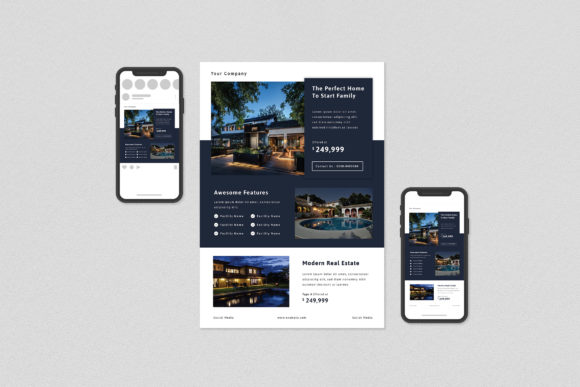
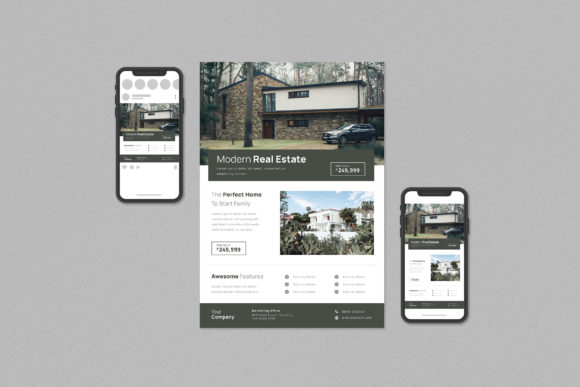
In the competitive landscape of property sales, the ability to produce high-quality marketing collateral rapidly is a distinct advantage. Modern Real Estate is not just about the architectural style of the buildings; it extends to the digital infrastructure used to market them. Utilizing a comprehensive template package designed for modern workflows allows agents, designers, and marketers to maintain a consistent brand identity across multiple platforms without reinventing the wheel for every new listing. This approach shifts the focus from repetitive design tasks to strategic marketing execution.
The Role of Integrated Template Systems
A robust marketing workflow relies on interoperability. The transition from concept to publication involves various software environments, file types, and output specifications. A well-structured template system addresses this by providing files compatible with industry-standard software. Specifically, utilizing a product that includes AI Compatible files for Adobe Illustrator CC and PSD Compatible files for Adobe Photoshop CS4, CS5, CS6 ensures that whether a user prefers vector-based editing or raster-based manipulation, the assets are ready for immediate deployment. This compatibility eliminates the friction often encountered when trying to adapt generic files to professional software, allowing for a smoother execution phase.
Furthermore, the utility of these templates lies in their structural integrity. When a file is described as Fully customizable and editable, it implies a user experience that prioritizes efficiency. For a busy real estate professional or a graphic designer managing multiple accounts, the ability to quickly alter text, swap images, and adjust colors without breaking the layout is critical. This capability transforms the design process from a creative bottleneck into a streamlined assembly line.
Anatomy of an Effective Real Estate Template
Understanding the technical specifications of a template is essential for quality control. The difference between an amateur flyer and a professional brochure often comes down to technical details like file organization and resolution. A high-quality Modern Real Estate template set addresses these pain points through specific design choices.
Layered Architecture for Precision
One of the most significant workflow improvements is the separation of elements. The requirement that texts, images, and graphics are on separate layers is not merely a technical preference; it is a functional necessity. In a typical workflow, a property might change hands, a price might drop, or a feature image might need updating. With separate layers, a user can modify the headline without accidentally shifting the background image, or swap a photo without disrupting the text overlay. This modularity ensures that edits are surgical and precise, preserving the overall design integrity while allowing for rapid content updates.
Print and Digital Specifications
Real estate marketing requires versatility. An agent needs a physical flyer for an open house and an Instagram post for a digital campaign simultaneously. A comprehensive template package acknowledges this dual need by providing distinct specifications:
- Print-Ready Formats: The inclusion of an Artboard size A4 with CMYK 300 DPI settings ensures that physical prints are sharp and color-accurate. This "bleed" setup is crucial for professional printing services, preventing unprinted edges or awkward cropping.
- Digital Optimization: For social media, the package includes Instagram Post 1080×1080 and Instagram Story 1080×1920 sizes in RGB 72 DPI. This distinction is vital for file management; using print-resolution files for web results in unnecessarily large file sizes that slow down loading times, while using web-resolution files for print results in pixelation.
By separating these specifications, the templates allow users to maintain high fidelity across all channels. The Mockups are not included note clarifies the scope, focusing the user on the actual design assets rather than presentation aids, ensuring the workflow remains grounded in production.
Integrating Templates into the Creative Process
Integrating these assets into a daily routine requires a shift in mindset from "designing" to "customizing." This shift significantly reduces the time-to-market for new listings.
Preparation and Asset Management
Before opening the files, a user should prepare their assets. Since Photography images are not included, the workflow begins with the property shoot. The photographer provides the raw images, which the user then crops and color-corrects. Similarly, the use of Free fonts used not included means the user must download and install the typography prior to opening the files to avoid missing font errors. The download links provided in the help file facilitate this step, ensuring the visual identity matches the template’s original design intent.
Once the fonts are installed and images are selected, the actual customization process is rapid. Because the files are well-organized, a user can locate the "Headline" layer or the "Property Specs" group instantly. This organization is particularly beneficial for teams where a junior designer or a virtual assistant might be handling the initial layout, allowing a senior creative director to quickly review and approve the work.
Workflow Efficiency and Consistency
Consistency is the hallmark of a professional brand. When a real estate agency uses the same Modern Real Estate template for every listing, it creates a recognizable visual language. Clients begin to associate that specific layout and color palette with the agency's reliability and market presence. This is where the Help File becomes a valuable resource; it often contains guidelines on how to best utilize the templates to maintain this consistency, offering tips on image placement and text hierarchy.
Moreover, the efficiency gained allows for A/B testing in marketing. Because it is easy to edit, an agent could quickly create two versions of an Instagram Story—one focusing on the kitchen and another on the backyard—to see which garners more engagement. This agility is impossible when starting designs from scratch but is a natural byproduct of a template-based workflow.
Long-Term Usability and Quality Control
Investing in a template system is a long-term strategy. The compatibility with Adobe Illustrator CC and older versions of Photoshop (CS4, CS5, CS6) ensures that the templates remain useful even if the user upgrades their hardware or software, or if they are working with collaborators who have not updated their systems. This backward compatibility is a practical consideration that prevents asset obsolescence.
Quality control is also simplified. Because the templates are designed at 300 DPI for print, users do not need to worry about resolution issues. The bleed settings prevent the common error of cutting off text at the edges of a printed page. By adhering to these pre-set professional standards, the user reduces the risk of costly reprints or poor-quality digital displays.
Ultimately, Modern Real Estate marketing is about leveraging professional tools to communicate value effectively. By using a structured, customizable template package, professionals can bypass the technical hurdles of design and focus on what matters most: connecting the right property with the right buyer. The integration of organized files, clear layer structures, and print-ready specifications creates a seamless bridge between creative vision and market reality.