Archery Glyph Icon: A Comprehensive Evaluation for Designers and Developers
Understanding the Archery Glyph Icon Set
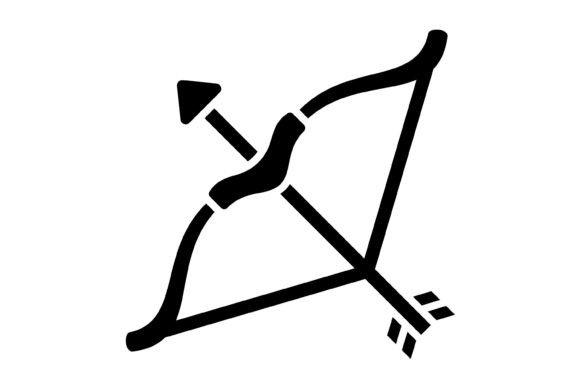
The Archery Glyph Icon collection is a specialized set of vector graphics centered around the theme of archery. This package includes 100 distinct icons, each designed as a glyph—a simplified, symbolic representation. The set is delivered in a compressed ZIP file containing five versatile file formats: AI (Adobe Illustrator), EPS, JPG, PNG with a transparent background, and SVG (Scalable Vector Graphics). This format variety is a deliberate design choice, aiming to provide flexibility across different software environments and project requirements. The core proposition is a ready-to-use asset pack for professionals who require archery-themed visual elements.
Evaluating the Format Inclusion and Technical Specifications
A critical aspect of any icon set is its technical delivery. The inclusion of AI and EPS files makes this set particularly relevant for designers working within Adobe's ecosystem or other professional vector editing software. These formats allow for full scalability and detailed path editing, which is essential for custom branding or complex compositions. The SVG format is the cornerstone for web and mobile development, offering crisp rendering at any size and compatibility with modern front-end frameworks. For quick implementation where vector editing is not required, the JPG and PNG formats provide immediate usability. The PNG files with transparent backgrounds are especially valuable for layering icons over other visual content without background interference, a common requirement in UI design and presentations.
When considering this set, it is important to verify that the provided formats align with your primary workflow. A developer focused on a React Native mobile app, for instance, would derive the most value from the SVG and PNG files. A print designer preparing a brochure would prioritize the AI or EPS vectors. The "ready to use for all devices and platforms" claim is contingent on this format compatibility, which the package appears to address comprehensively.
Assessing Design Philosophy and Usability
The icons are described as "glyphs" designed for "maximum usability." In design terminology, a glyph icon style typically implies a monoline, minimalist aesthetic. This approach prioritizes clarity and instant recognition over intricate detail, which is a significant advantage in user interface (UI) design. Such icons tend to scale well, remain legible at small sizes, and maintain visual consistency within a set. For projects where a clean, modern, and unobtrusive visual language is desired—such as dashboards, mobile apps, or instructional materials—this design philosophy is a strong fit.
However, this minimalist style presents a tradeoff. Projects requiring highly detailed, illustrative, or photorealistic imagery may find glyph icons insufficient. If your goal is to create a dramatic, artistic centerpiece, a different style of illustration would be more appropriate. The strength of the Archery Glyph Icon lies in functional clarity, not artistic expression. The "easy to edit and scale" feature is inherent to the vector formats, but actual editability depends on the user's proficiency with design software. The icons are structured to be modified, but the learning curve for editing vector paths remains a consideration for those unfamiliar with tools like Illustrator.
Identifying Strong Use Cases and Alternatives
This icon set is a strong candidate for several specific scenarios. For a sports or fitness mobile application that includes tracking for archery, these glyphs could serve as perfect tab icons, feature indicators, or list decorators. A website for an archery club, equipment retailer, or sporting goods store could use these icons to visually enrich navigation menus, feature lists, or promotional banners. In educational contexts, such as an e-learning module on Olympic sports or a historical presentation, the icons can effectively break up text and illustrate key points without distracting from the content. The inclusion in "templates" suggests utility for creating branded materials like certificates, event programs, or merchandise mockups.
Conversely, alternatives may be worth considering under different circumstances. If your project requires icons outside the narrow scope of archery (e.g., a general sports set including running, swimming, etc.), a broader, more general-purpose icon library would be more efficient. If the visual tone of your project demands isometric, 3D, or hand-drawn styles, this set's uniform glyph aesthetic would clash with your design system. Furthermore, while 100 icons provide variety, it is prudent to preview the specific icons included to ensure they cover the exact actions or concepts you need to represent, such as specific equipment (recurve bow, compound bow, arrow types) or actions (nocking, drawing, releasing).
Decision-Making Insights and Final Considerations
When evaluating the Archery Glyph Icon set, align it directly with your project's core requirements. Ask yourself: Does the archery theme match my subject matter? Does the minimalist glyph style fit my desired aesthetic? Are the included file formats compatible with my team's tools and delivery platforms? If the answer to these questions is yes, this set offers a cohesive, well-formatted solution that can save significant design and development time.
For procurement, consider the value proposition. Purchasing a pre-made, themed set like this is often more cost-effective and time-efficient than commissioning custom icon design or piecing together icons from multiple generic sources. The consistency in style and format across 100 icons ensures visual harmony in your final product. Before finalizing, review the license terms to ensure they cover your intended use, whether for a single client project, a commercial product, or an internal tool.
In summary, the Archery Glyph Icon is a targeted utility product. It excels as a solution for projects that demand clean, scalable, and technically versatile archery-themed icons. Its value is maximized in digital interfaces, presentations, and print materials where clarity and consistency are paramount. By carefully matching its strengths—specific format support, design style, and thematic focus—to your project's goals, you can make an informed decision on its suitability. It is not a universal design panacea, but within its niche, it represents a practical and potentially valuable asset.