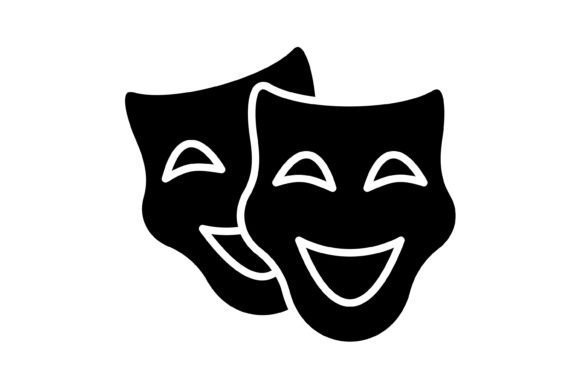
Theater Masks Glyph Icon: A Complete Visual Solution for Creative Projects
In the world of digital design, visual communication is paramount. Whether you are developing a mobile application, designing a website, or creating printed marketing materials, the need for clear, professional, and scalable imagery is constant. This is where the Theater Masks Glyph Icon enters the conversation. It is not merely a picture of a smiley and frowny face; it is a versatile design asset crafted to meet the rigorous demands of modern media production.
The Theater Masks Glyph Icon represents the classic symbols of the performing arts—comedy and tragedy. However, in the context of a professional design toolkit, it serves a much broader purpose. It acts as a universal symbol for entertainment, emotions, storytelling, and creative arts. For designers and developers, finding an asset that is both meaningful and technically robust can be a challenge. This icon set is designed to bridge the gap between aesthetic appeal and functional performance.
Understanding the Core Asset
At its heart, the Theater Masks Glyph Icon is a vector-based graphic. This distinction is crucial for anyone working in design. Unlike raster images (like standard photographs), vector graphics are based on mathematical equations rather than a fixed grid of pixels. This means the icon can be scaled from the size of a postage stamp to the size of a billboard without losing clarity or becoming pixelated. This scalability is the foundation of its utility in professional environments.
The visual style of a glyph icon is typically minimalist and monochromatic. This design philosophy ensures that the icon remains legible and effective across various backgrounds and contexts. It does not rely on heavy shadows or complex textures, which often fail to render correctly on smaller screens or low-resolution prints. Instead, the Theater Masks Glyph Icon relies on strong lines and distinct shapes to convey its meaning instantly.
The Challenge of Multi-Platform Compatibility
One of the most significant hurdles for modern creators is the fragmentation of platforms. A project today might need to live simultaneously on an iOS app, an Android device, a desktop website, and a printed flyer. Each of these platforms has different technical requirements regarding file formats and resolution.
Developers often face the frustration of downloading an icon only to find it is available in a single format that does not suit their coding environment. For example, a web developer might need an SVG (Scalable Vector Graphic) for fast loading and responsiveness, while a print designer might require an AI (Adobe Illustrator) file to ensure the highest possible quality for offset printing. Without the right files, the workflow slows down, and the final product may suffer in quality.
Comprehensive File Formats for Seamless Integration
The Theater Masks Glyph Icon package addresses these technical challenges by including a comprehensive suite of five different file formats. This variety ensures that the asset is ready to use immediately, regardless of the project type.
- AI (Adobe Illustrator): This is the industry standard for vector editing. If you need to modify the paths, change the stroke weight, or integrate the icon into a complex vector illustration, the AI file is your primary resource.
- EPS (Encapsulated PostScript): A legacy format that is still widely used in various graphic design software. It ensures compatibility with older systems and different design suites beyond Adobe products.
- SVG (Scalable Vector Graphics): This is the gold standard for web and mobile development. SVGs are lightweight, code-based, and scale perfectly on any screen size. They are essential for responsive web design.
- JPG (Joint Photographic Experts Group): While not scalable like vectors, JPGs are universally compatible. They are useful for quick mockups, presentations, or situations where vector support is unavailable.
- PNG (Portable Network Graphics): Included with a transparent background, the PNG format is vital for layering images. It allows the Theater Masks Glyph Icon to be placed over any color or image without a white box surrounding it.
This "Zip File" delivery ensures that the user has total control over their assets. You are not locked into a single workflow; you have the flexibility to choose the file that best suits the specific technical requirement of the moment.
Practical Applications and Use Cases
The versatility of the Theater Masks Glyph Icon allows it to be deployed in a wide range of scenarios. Its utility extends far beyond theater websites, making it a valuable asset for generalists and specialists alike.
Mobile App Development
For mobile developers, space and clarity are at a premium. App interfaces (UI) require icons that are instantly recognizable at small sizes. The SVG and PNG formats of this icon are perfect for navigation bars, category headers for entertainment apps, or status indicators. Because the icon is designed for maximum usability, it ensures that users can understand the function of a button without needing to read text labels, thereby improving the user experience (UX).
Web Design and UI/UX
On the web, loading speed affects SEO rankings and user retention. Using the SVG format of the Theater Masks Glyph Icon ensures that the graphic is lightweight and loads instantly. It can be used as a "loader" animation, a favicon for a drama blog, or a visual separator in a long-form article about film reviews. The transparent background allows it to sit harmoniously within any color scheme or layout grid.
Print and Presentation
When moving to physical media, quality cannot be compromised. The AI and EPS files ensure that the lines remain sharp even when printed at high DPI (dots per inch). This makes the icon suitable for business cards for actors, brochures for community theater groups, or stickers and merchandise. Similarly, for corporate presentations, using a high-quality glyph icon adds a professional polish that clipart cannot match.
Templates and Illustration
Graphic designers often build templates for social media or marketing kits. Including the Theater Masks Glyph Icon in a template allows the end-user to easily customize the design. Because the vector files are easy to edit, a designer can change the color of the masks to match a specific brand palette in seconds.
Tailoring the Approach for Different Users
Different users will approach the Theater Masks Glyph Icon with different goals, and the asset is flexible enough to accommodate them all.
The Efficiency-Focused Developer: This user cares about performance. They will likely utilize the SVG format to keep the website lightweight. They will appreciate that the icon is "ready to use" and requires no conversion or cleanup before being added to the codebase.
The Detail-Oriented Designer: This user cares about aesthetics and brand consistency. They will open the AI file to ensure the icon aligns perfectly with the typography and other visual elements of the project. They may modify the anchor points or combine the icon with other shapes to create a unique logo mark.
The Content Creator: This user needs quick solutions for social media or video thumbnails. They will likely use the PNG format because of its transparent background, allowing them to drag and drop the icon onto an image in a tool like Canva or Photoshop without worrying about masking.
Implementation Best Practices
To get the most out of the Theater Masks Glyph Icon, consider the following implementation tips:
- Consistency: If you are using this icon alongside other icons, ensure they share a similar visual weight. A "glyph" style implies a specific thickness and minimalism. Mixing it with overly detailed 3D icons may create visual discord.
- Color Psychology: While the default is likely black or grey, consider changing the color to match the emotional context. A vibrant yellow might suit a comedy section, while a deep blue might be better for a dramatic review section.
- Accessibility: When using the icon on a website, always include "alt text" (alternative text) in the code. This ensures that screen readers used by visually impaired visitors can describe the image, making your site more inclusive.
Conclusion
The Theater Masks Glyph Icon is more than just a simple graphic; it is a comprehensive visual tool designed for the modern digital landscape. By offering multiple file formats including AI, EPS, JPG, PNG, and SVG, it removes the technical barriers that often slow down creative projects. Whether you are building a mobile app, designing a website, or preparing print materials, this icon provides the scalability, clarity, and versatility required to produce professional results. Its focus on usability and ease of editing makes it an ideal choice for anyone looking to enhance their visual communication with a symbol that resonates universally.