The Universal Language of Care: Mastering the Hand with Heart Glyph Icon for Modern Design
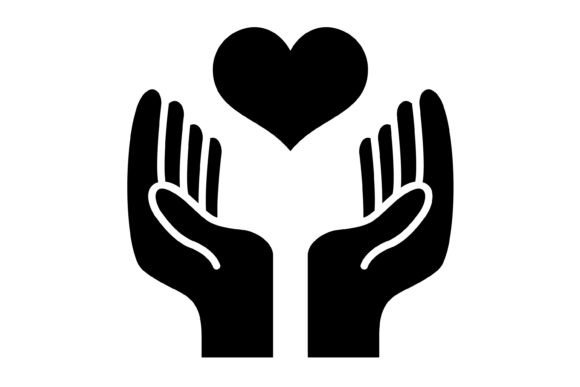
In the contemporary digital landscape, visual communication transcends linguistic barriers. The Hand with Heart Glyph Icon stands as a quintessential symbol of empathy, charity, health, and human connection. This specific iconography is not merely a decorative element; it is a functional tool designed to bridge the gap between a brand's message and the user's emotional response. As digital interfaces become more cluttered, the ability to convey complex concepts—such as compassion, donation, or wellness—through a single, scalable graphic becomes an essential skill for designers, developers, and content creators. The symbol represents a convergence of technology and humanity, offering a visual shorthand for support and care.
Anatomy of the Asset: Understanding the Design Philosophy
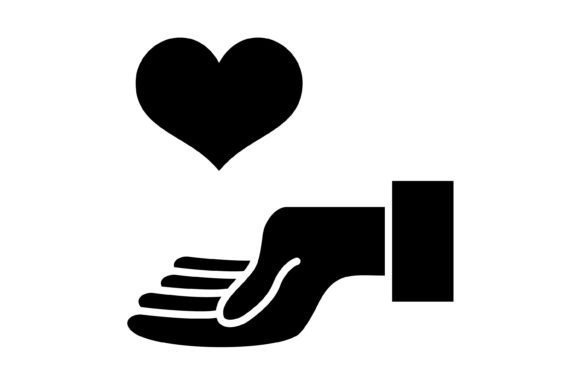
The effectiveness of any icon set relies heavily on its design philosophy. The Hand with Heart Glyph Icon is constructed with "maximum usability" as its core principle. Unlike overly detailed illustrations that can become muddy at small sizes, this glyph style focuses on clean lines and negative space. This minimalist approach ensures that the icon remains legible whether it is viewed on a high-resolution retina display or printed on a small business card. The design captures the essence of the gesture—the open palm offering support, the heart symbolizing love or aid—without relying on unnecessary textures or shadows that could date the asset quickly.
The versatility of the design allows it to function as a standalone call-to-action or as part of a larger visual system. For instance, in a user interface (UI), the icon can serve as a button for a "Donate" or "Support" feature. In print media, it can anchor a poster for a charity drive or a healthcare brochure. The neutrality of the glyph style ensures that it can adapt to various brand color palettes and aesthetic environments, from corporate minimalism to playful educational themes.
Technical Mastery: Navigating the Included File Formats
A significant advantage of this icon collection is the inclusion of five distinct file formats within the provided Zip file. Understanding the technical application of each format is crucial for professional workflow optimization. The formats included are AI, EPS, JPG, PNG, and SVG. Each serves a specific purpose in the lifecycle of a design project.
Vector vs. Raster: Choosing the Right Tool
The AI (Adobe Illustrator) and EPS (Encapsulated PostScript) files are vector-based formats. This means the graphics are defined by mathematical equations rather than pixels. For designers, this is the gold standard for scalability. Whether you are designing a mobile app icon at 64 pixels or a billboard at 64 feet, the AI and EPS files ensure that the Hand with Heart Glyph Icon remains crisp and sharp with no pixelation. These files are "easy to edit," allowing professionals to modify anchor points, change colors, or combine elements to create new compositions.
In contrast, the JPG and PNG files are raster formats, built on a grid of pixels. The JPG format is typically used for web content where file size is a concern, though it does not support transparency. The PNG file, noted for its transparent background, is indispensable for layering. It allows the icon to be placed over complex backgrounds, photographs, or color gradients without a white box surrounding it. This makes the PNG format particularly suitable for website headers, social media posts, and presentation slides where the icon needs to integrate seamlessly with the existing layout.
The Role of SVG in Modern Development
Perhaps the most critical format for modern web and mobile development is the SVG (Scalable Vector Graphics). Unlike traditional image formats, SVGs are written in XML code. This allows the icon to be indexed by search engines, improving the SEO value of the website. Furthermore, SVGs are incredibly lightweight and resolution-independent, making them the ideal choice for responsive design. For developers building mobile apps or websites, the SVG format ensures that the Hand with Heart Glyph Icon loads quickly and adapts instantly to any screen size, from a smartwatch to a desktop monitor.
Practical Applications Across Industries
The utility of the Hand with Heart Glyph Icon extends across a diverse range of sectors. Its semantic meaning is universal, yet its application is highly specific to the context in which it is placed.
Healthcare and Non-Profit Sectors
In the healthcare industry, the icon is a staple. It visually communicates patient care, mental health support, and community wellness initiatives. Hospitals and clinics often use this symbol on their websites to indicate support services or patient feedback portals. Similarly, non-profit organizations leverage the icon to signify donation buttons, volunteer sign-up pages, and fundraising campaigns. The visual cue of a hand holding a heart bypasses the need for verbose text, instantly signaling to the user that the organization is focused on aid and altruism.
Corporate Social Responsibility (CSR) and E-Commerce
Modern businesses are increasingly focused on Corporate Social Responsibility (CSR). E-commerce platforms and corporate websites utilize the Hand with Heart Glyph Icon to highlight ethical sourcing, charitable partnerships, or "round-up" donation features at checkout. It serves as a trust signal, assuring consumers that the brand values social impact. In the realm of templates, this icon is often included in corporate presentations to represent team building, employee wellness programs, or community outreach slides.
Creative Projects and Education
For educators and researchers, the icon can represent empathy studies, social sciences, or community engagement projects. In illustration and presentation design, it acts as a versatile graphic element to break up text-heavy slides or to add emotional weight to a narrative. Hobbyists and creators on platforms like Etsy or Patreon also use the icon to represent "support" or "tip jar" features, creating a friendly and approachable atmosphere for their audience.
Optimizing Workflow with "Ready to Use" Assets
The designation of these icons as "Ready to use for all devices and platforms" addresses a common pain point in the design process: compatibility. Designers often spend hours converting files to suit different software requirements. By providing a comprehensive package that includes vector and raster formats, this icon set streamlines the workflow.
The inclusion of 100 vector icons in the broader collection suggests a robust library of related symbols. This allows for a cohesive visual language across an entire project. For example, a mobile app developer can use the Hand with Heart Glyph Icon for the "Favorites" or "Care" tab, while using other icons from the same set for navigation, ensuring stylistic consistency. The ability to easily edit and scale these assets means that a single purchase or download can fuel an entire design system, from the initial wireframe to the final high-fidelity prototype.
Design Considerations and Accessibility
While the Hand with Heart Glyph Icon is visually distinct, its implementation must adhere to accessibility standards. When placing the icon on a background, contrast is key. Even with a transparent background, the color of the icon must stand out against the page color to be visible to users with visual impairments.
Furthermore, icons should rarely be used without context in critical navigation areas. Best practices dictate that the icon should be accompanied by a text label or have an "alt" attribute in the HTML code (if using SVG or PNG) to ensure screen readers can interpret the function of the button for visually impaired users. The semantic meaning of the icon—care and support—should be reinforced by the surrounding content to ensure the message is accessible to everyone, regardless of how they interact with the device.
The Future of Glyph Design
The trend in digital design is moving toward fluidity and adaptability. Static icons are evolving into animated micro-interactions. A static Hand with Heart Glyph Icon might pulse gently when a user hovers over it, providing visual feedback. The vector nature of the included AI and SVG files makes them perfect candidates for such animations, as the paths can be manipulated by code to create motion without increasing file size. As we move further into an era of wearable technology and augmented reality, the need for clear, scalable, and emotionally resonant icons will only grow. This icon set is not just a static asset; it is a foundational component for future-ready digital communication.